


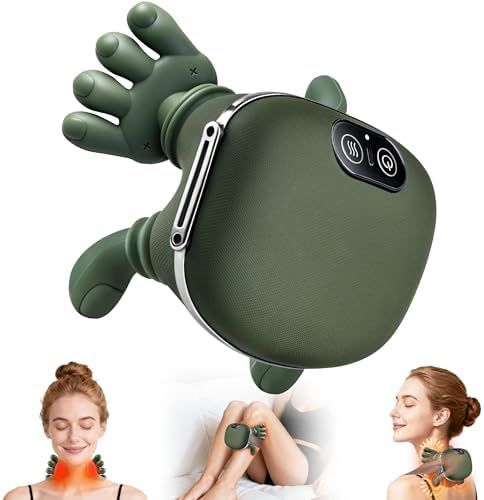
One of the biggest promises in modern personal wellness technology is surprisingly simple: to recreate the feeling of human hands. Hand Simulated Neck shoulder massager or “bionic” massagers aim to replicate the pressure, rhythm, and adaptability of a professional masseuse. While no machine can fully replace human intuition, today’s devices come much closer than earlier generations of massage technology.
This “human touch illusion” is achieved through a combination of mechanical engineering, motion design, and sensory psychology that together create a surprisingly realistic massage experience.
Why Human Touch Is So Hard to Replicate
A professional massage therapist does more than apply pressure. Human touch is adaptive, responsive, and variable in ways machines historically could not match.
Dynamic Pressure Control
A therapist constantly adjusts force based on muscle response. If a knot is detected, pressure increases; if the area becomes sensitive, pressure softens.
Rhythm and Flow
Human hands naturally vary speed and direction. This variation prevents the body from adapting too quickly to a repetitive stimulus.
Intuitive Targeting
A skilled masseuse can “read” muscle tightness and focus on problem areas without rigid programming.
Machines must simulate these qualities through engineering rather than intuition.
How Hand-Simulated Massagers Create the Illusion
Modern massagers use multiple technologies working together to mimic human behavior.
1. Multi-Directional Kneading Nodes
Rotating or moving nodes are shaped to imitate fingers and thumbs.
What This Achieves
- Circular kneading that mimics palm rotation
- Alternating pressure like thumb presses
- Movement across muscle fibers instead of one fixed point
This creates a more natural sensation than simple vibration.
2. Variable Speed Algorithms
Instead of maintaining a constant rhythm, advanced devices shift speeds during operation.
Why Variation Matters
Human massage is never perfectly uniform. By changing speed, devices simulate:
- Slow deep pressure phases
- Faster surface relaxation phases
- Transitional movements between muscle groups
This unpredictability makes the experience feel more “alive.”
3. Adjustable Depth Simulation
Some massagers can extend nodes deeper into muscle tissue.
How It Feels Human-Like
Human hands naturally adjust depth based on resistance. Depth simulation mimics this by increasing or decreasing penetration into muscle layers.
4. Directional Reversal Motion
Nodes often change direction during a session.
Effect on the Body
This replicates the alternating motion of human hands moving back and forth across muscles, preventing adaptation and enhancing relaxation.
The Role of Heat in the Illusion
Heat therapy is a crucial part of mimicking human touch.
Why Heat Feels Human
Human hands are warm, and this warmth signals comfort and safety to the nervous system.
Physiological Effects
- Increases blood flow
- Softens muscle fibers
- Enhances sensory realism
When combined with kneading motion, heat significantly strengthens the perception of a human-like massage.
Sensory Psychology: Why the Brain Believes It
The “human touch illusion” is not just mechanical—it is neurological.
Pattern Recognition
The brain interprets irregular, variable pressure as more natural than repetitive motion.
Comfort Association
Warm, rhythmic pressure triggers relaxation responses similar to those produced by real human contact.
Reduced Predictability
Unpredictable movement keeps the nervous system engaged in a more organic way, similar to real massage interaction.
Where Machines Still Fall Short
Despite major advancements, limitations remain.
Lack of True Intuition
Machines cannot sense emotional or physical nuance the way a human therapist can.
No Real-Time Feedback Loop
A masseuse adjusts instantly to subtle muscle reactions, while devices rely on pre-programmed settings.
Limited Precision on Complex Pain Points
Certain deep or irregular muscle knots still respond better to manual therapy.
Where Hand-Simulated Massagers Excel
Even with limitations, modern devices offer strong advantages.
1. Consistency
Every session delivers the same level of pressure and technique.
2. Accessibility
Available anytime without appointments or scheduling.
3. Cost Efficiency
One device replaces repeated professional sessions over time.
4. Targeted Relief
Designed specifically for common tension areas like:
- Neck
- Shoulders
- Upper back
Why the Illusion Still Matters
Even if it is not perfect, the illusion of human touch has therapeutic value.
Emotional Comfort
Simulated touch can still reduce stress and promote relaxation responses.
Stress Reduction
Rhythmic, warm pressure helps activate the parasympathetic nervous system.
Habit Formation
Users are more likely to use devices that feel natural and comfortable.
The Future of Human-Like Massage Technology
Advancements are moving toward even more realistic simulation.
Smarter Pressure Systems
Sensors may eventually adjust pressure in real time based on muscle resistance.
AI-Driven Massage Patterns
Adaptive algorithms could personalize massage styles for individual users.
Improved Anatomical Mapping
Future devices may better conform to individual body shapes for more precise targeting.
Final Thoughts
Hand-simulated massagers are not meant to replace human therapists, but to replicate key elements of their technique in a convenient, accessible form. Through variable motion, depth control, heat therapy, and carefully engineered rhythm patterns, they create a convincing “human touch illusion” that effectively reduces tension and promotes relaxation.
While the intuition of a real masseuse cannot be fully replicated, modern technology has reached a point where the experience feels remarkably close—offering reliable, consistent relief that fits easily into everyday life.
